
Learn the science behind mastering Korean without memorizing grammar tables or playing repetitive games.
↓ Read the Korean RoadmapNew to Comprehensible Input? Read our general language methodology here.
81 Million
Hangul (24 letters)
The Korean alphabet, Hangul, was specifically invented in 1443 by King Sejong to be as easy to learn as possible. You can learn to read it in a single afternoon.
Korean is widely considered a 'language isolate', meaning linguists have not found a proven genealogical relationship with any other living language family.
Korean uses a Subject-Object-Verb order. You have to wait until the very end of the sentence to hear the action. You must train your brain to suspend judgment until the sentence finishes.
Korean attaches tiny markers (like 는/은, 를/을) to words to indicate if they are the subject, object, or topic of the sentence. They have no direct English equivalent and must be acquired through massive reading.
You must change verb endings and sometimes entire vocabulary words depending on the age, status, and relationship of the person you are speaking to.
Focus: Getting used to the sound of Korean. Learning basic glue words. Being able to distinguish between individual words and rhythms in spoken sentences.
Focus: Immersing in Comprehensible Input. You can now read simple stories and impress native speakers with basic phrases. The challenge here is finding content that actually interests you at this precise level.
Focus: You are consuming near-native, highly entertaining content. Listening to audio, reading extensively, and letting complex grammar structures wire themselves into your brain subconsciously.
At this point, you don't need language apps. Consume native YouTube, read native books, speak to native speakers. It's all about repetition and maintenance now.
Executing Phases 2 & 3 manually is incredibly frustrating. Finding native content at your exact reading level is rare. Audio transcripts don't always match. Stopping to make manual flashcards breaks your immersion. Tracking a 7,000-word vocabulary in a spreadsheet is impossible.
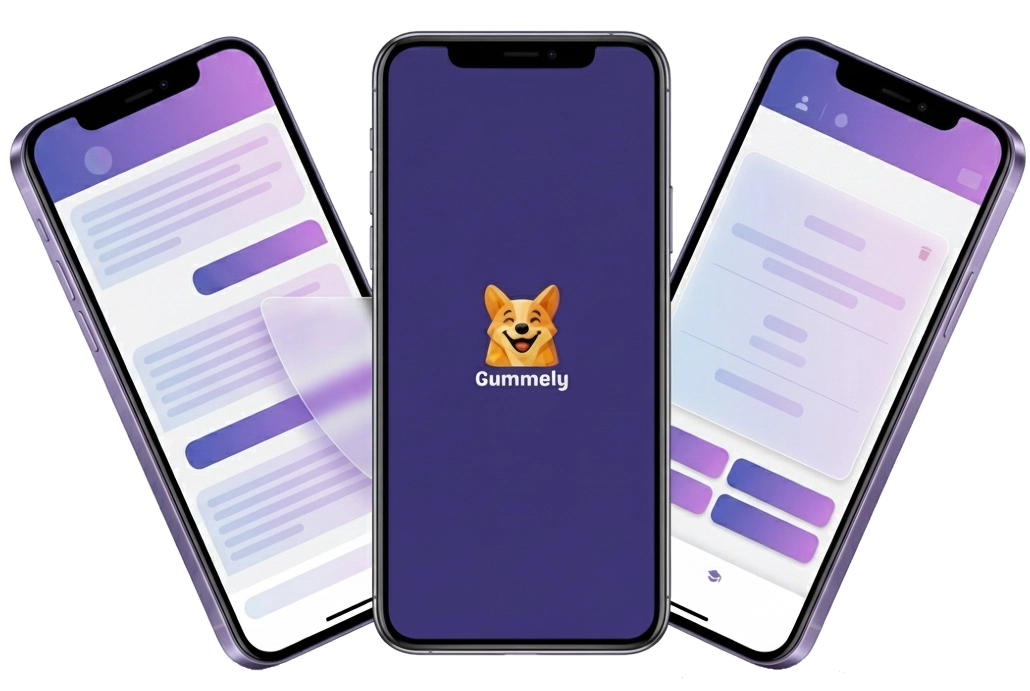
Gummely is built entirely around automating this friction away, so you spend 100% of your time immersed in Korean.
Generates CI content exactly at your current word-count level.
Perfectly synced audio trains your ear to the natural rhythm of the language.
Watch your progress visually as you approach the 7,000-word 'delete the app' goal.
No. While knowing them helps guess the meaning of advanced vocabulary, modern Korean is written entirely in Hangul. You can reach absolute fluency without studying Hanja.
You don't translate. Translation makes SOV order impossible to process in real-time. Gummely trains you to map Korean words directly to concepts, so the order begins to feel logical.
Korean has three different types of consonants (plain, aspirated, and tense) that can be tricky for English speakers to differentiate. Synced audio is highly recommended to train your ear.
Gummely focuses on Comprehensible Input rather than translation drills. We generate Korean stories exactly at your vocabulary level to facilitate natural acquisition.
Yes! A single Gummely subscription grants access to all 11 languages including Spanish, German, French, Japanese, and Chinese.
